Digitalization begins long before a new system Is developed
As organizations grow and business processes become more complex, the number of employees, operational tasks, and business requirements continues to increase. Manual records multiply, internal email communication becomes more frequent, and everything appears to function as expected. New tools and communication channels are introduced, because they are the fastest solution to operational challenges.
This way of working can continue for years. Every spreadsheet or tool solves a specific problem, moving the business forward. An operational model is built on a growing number of activities that support daily operations. Everything seems to work, but there is no single place where all the data is stored. The business keeps growing, while the operational model remains the same.
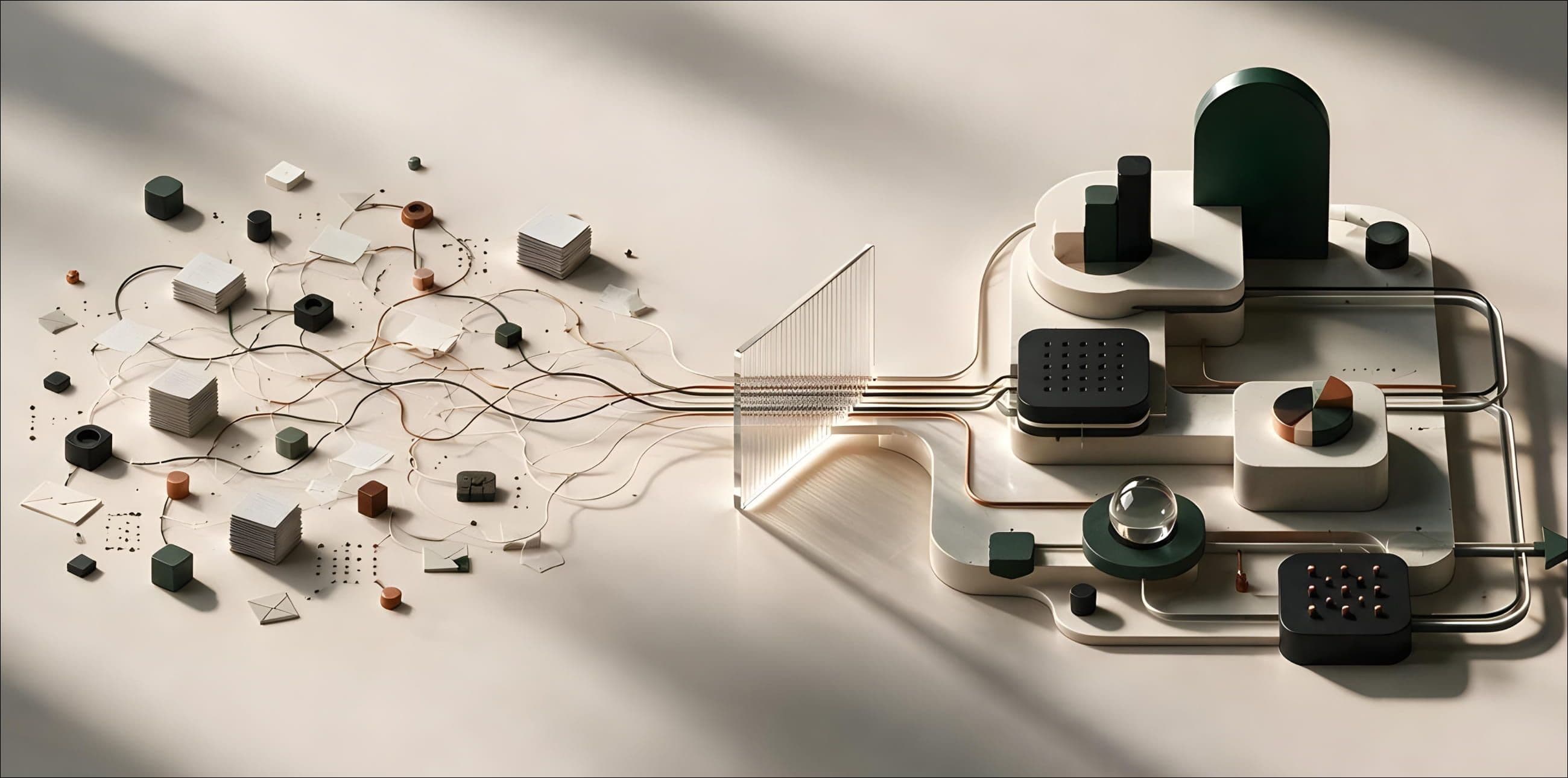
Every growing organization eventually reaches a point where its operational model becomes more complex than the tools supporting it. Digitalization is rarely a planned milestone - it is usually a response to operational complexity. It begins when existing ways of working can no longer support the business. Information is maintained in multiple places, different records contain different versions of the same data, and coordination between teams becomes increasingly difficult. Individual tools are not the problem, but adding more of them no longer solves the underlying issue. Digitalization is not about replacing spreadsheets with software. It is about redesigning the operational model that the business has gradually outgrown.
Before developing a new system, it is essential to understand how the existing one functions. How information moves through the organization, and where differences appear between departments. It is the only way that an operational platform can be designed to support the real business workflows, instead of rewriting spreadsheets and manual processes.
Fragmented data creates different versions of the same business
Fragmented data requires additional coordination. As the business grows, new spreadsheets continue to appear. Part of the data is stored in the ERP system, another part in the accounting software. Email is used for communication between employees, recording the steps in daily operations. Some information stays within departments, and every source serves a purpose.
The problem begins when the same information exists in multiple places. A change is made in one record, but is it updated in another? Both versions are used, but which one is correct? Different versions of the same information flow throughout the business, and mistakes are visible only when reports are generated.
Employees begin to check the data, reports are verified more than once… As the business operations become more complex, more time is spent on maintaining the data.
Fragmented data is not the result of poor organization; every step created earlier had a valid operational reason at the time. The business grew faster than the systems that were supporting it. The need for digitalization appears. So does the need for a single source of data across the organization.
When a way of working outgrows Excel, it becomes a limitation for future business growth. Every organization reaches that point at a different stage of development. That is when digitalization becomes the next step in the company's development.
Every department develops its own way of working
Organizations become more complex as the departments develop their ways of working. Data moves between departments, as the operational challenges begin to appear in day-to-day activities.
Every department optimizes its own part of the business
Departments develop their own working methods; administration keeps its own records, operations manage business processes, sales use tools to speed up daily work, while accounting keeps collecting the information needed for financial reporting. Every department optimizes its own part of the business according to its operational needs, tasks and workflows. What happens when those processes begin to depend on each other?
Manual data updates and phone calls are part of everyday work by now. Spreadsheets are shared by email, every business event passes through several points where information can lose its accuracy, before it reaches its final version. Every department does its own job, but the organization no longer operates within a shared operational model.
The work still gets done. It is becoming clear how much time is spent on coordination between teams, and the number of employees and customers continues to grow.
Communication becomes a business process of its own
As the organization grows, so does the coordination. Data is verified, phone calls, emails, and messages keep teams aligned. Part of the business process moves from the operational system into communication channels.
Communication keeps the business running. Information is passed between people several times, project status is checked in multiple places, and more and more time is spent on determining the right version of the data. Work increasingly depends on coordination instead of a process supported by the system.
No one has a complete view of the business
Visibility across the business becomes limited. Every department only sees its own part of the process, but not what comes before or after it. Information is spread across spreadsheets and tools, making the business more difficult to manage.
Simple questions now require additional verification. What stage is a project in? Who is waiting for the next step? Answers are collected from multiple sources before decisions can be made.
This is the point where organizations begin digitalization processes. The goal is to regain visibility across the business and connect the workflows that have evolved separately.
We encountered this situation during the development of the Officium WasteManager software. The biggest challenge was understanding how the business operated before digitalization. Data was all over different records, Excel spreadsheets… while part of the information was passed between employees.
The operational model that had evolved allowed the business to continue growing until it reached a certain point. After that, all those processes had to be connected within the same operational system. We had to establish which data was correct and how information moved between departments. Some of the data was entered multiple times within the same process because different departments had used different records. Before any software was developed, it was necessary to determine when each piece of data was created and who owned it.
Only after the operational model was fully understood did software development become possible. Otherwise, the new platform would simply have digitalized the same fragmented processes that already existed.
The project started by aligning ways of working. After that, we established a single source of data and defined common business practices. Software functionality came after that. The operational platform that emerged supports the business as a whole today, instead of digitalizing individual Excel spreadsheets and manual procedures, which is often the case.
The Officium WasteManager project experience confirmed that the greatest value is created when the entire organization starts using the same data and the same processes within a shared operational model, regardless of department.
A centralized operational system changes the way business Is coordinated
Digitalization simplifies the way an organization operates. When data and processes become visible to everyone, the changes are not only technological but operational as well. Coordination, decision-making, and planning of business development become much easier.
A single source of data improves transparency and accountability
When every department uses the same information, additional verification is no longer necessary. Which record? Which tool? Every change becomes visible to everyone in a single operational system.
Business transparency increases, and responsibilities become clearer. Process flow is easier to follow, and the information needed for decision-making is available according to authorization levels. There is no longer any dependency on individuals, the ones who know where particular information is stored. Everything is available within the system.
Automated workflows reduce manual coordination
Business processes brought together within a single operational platform reduce the need for communication between employees. Coordination takes place through the system, information follows projects, and every change becomes immediately visible to everyone involved.
This reduces the need for additional verification, phone calls, and emails used to confirm the status of individual tasks. Employees spend more time doing their work and less time coordinating information between departments and tools.
The organization builds a foundation for future growth
Business operations become more predictable. Data, processes, and responsibilities move within a single operational model. Reports are based on a single source of data, reflecting business performance. New employees become part of existing processes more easily, and business growth no longer requires proportional growth in administration.
Centralization is not the goal of digitalization; it is the result of building business processes around shared data and shared workflows. Organizations that reach this stage are no longer replacing spreadsheets—they are replacing an operational model that can no longer support further growth. That is why unified operational platforms become the foundation for the next stage of business development.