Multiple tools become part of the same process
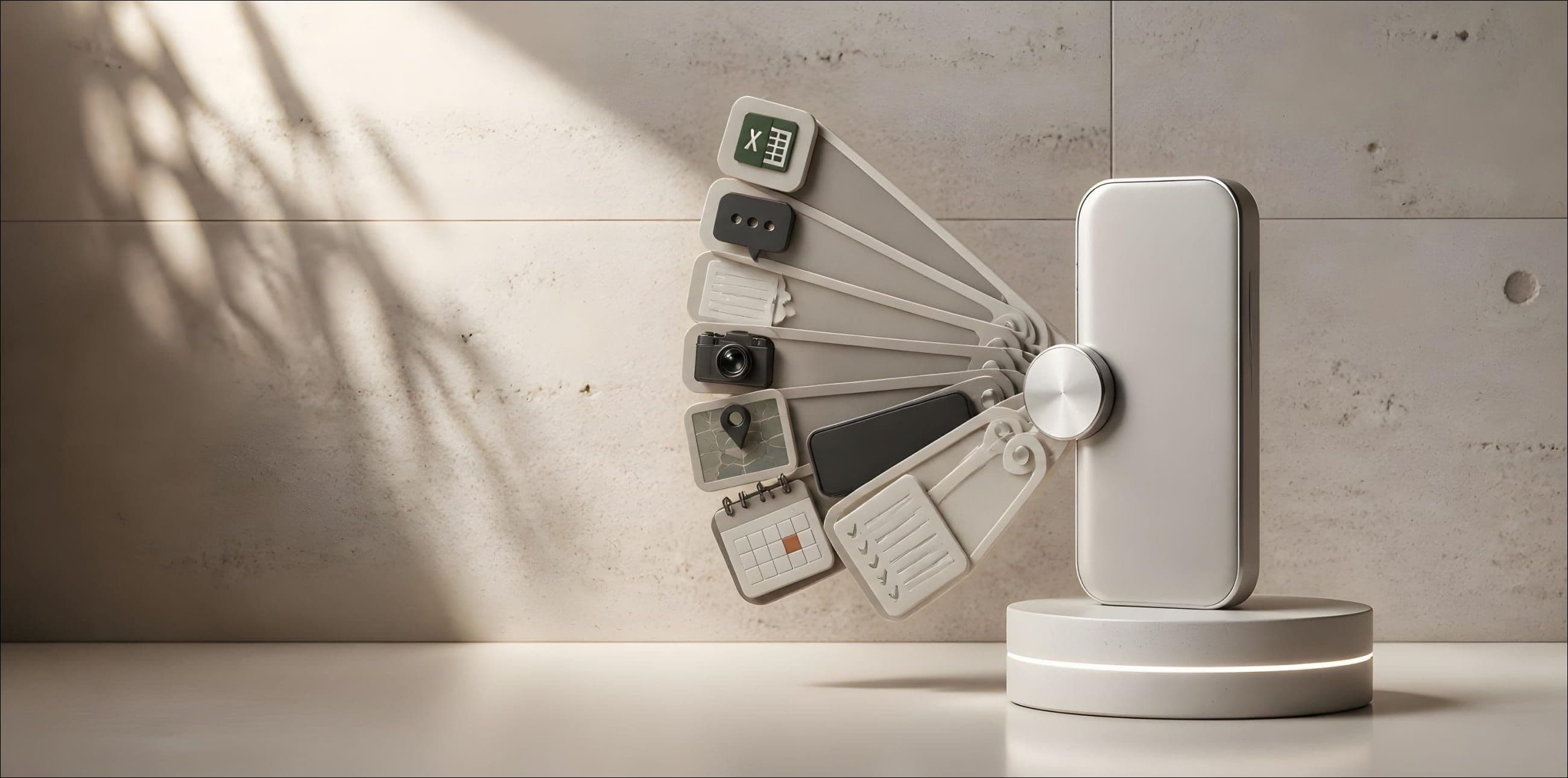
Organizations introduce a large number of tools in daily operations. One tool handles communication, another stores information, and a third tracks task progress. Tools are introduced to solve specific operational needs, but each new one integrates into the system.
Teams find new efficient ways to complete their work; information is available, internal processes function as planned, and daily activities follow. Business grows, and so does the number of tools. Everything seems fine, for now.
Email communication, Excel spreadsheets, personal notes, all become part of everyday workflows. Records created as temporary solutions now are part of operational processes. Information flows between different systems, without a place where it is collected.
As the business grows, additional tools continue to appear because each one solves a specific operational problem. Over time, however, they stop working independently and become part of the same business process. Information moves between applications, employees, and communication channels, while no single system reflects the complete operational picture.
This is the point where organizations begin looking for a different approach. The solution is rarely another tool. It is redesigning the workflow so that information moves through one operational process instead of being transferred between many disconnected ones.
How temporary solutions become part of the process
Temporary solutions are introduced to solve problems, but they become standard. Once they help in a specific situation, they are used again, and again.
An Excel spreadsheet was created to track a few tasks. Task by task, it becomes the source of information for the entire team. Notes once kept to organize daily work, now evolved into an everyday to-do list. Communication was supposed to happen through official channels, but under pressure people start using private chat groups, and the practice remains.
Parts of the process now depend on tools that were never intended for such a role. The organization adapts to this way of working. New employees learn where information is stored outside the systems, which were designed to support the business.
The problem rarely appears overnight. It becomes visible only when the organization grows and more people need access to the same information. Temporary records become operational dependencies, and processes begin relying on employees who know where information is stored instead of on the systems that were designed to manage it.
One customer, five different systems
Customer information changes throughout the relationship. What happens when the same information exists in multiple places?
A new address is entered into one record, while another still contains the old one. One part of the organization uses a phone number stored in a document, while others continue working with outdated information. Individual differences appear harmless at first, but they accumulate over time.
Data is not missing, there is often too much of it. The same information exists in several places at the same time. Which version is correct? Part of the working day is spent just finding answers in records.
Situations appear as small interruptions in everyday work. A delivery is sent to the wrong address, or a customer is called on an outdated number. Small problems appear, disappear, and return once again. When they start happening frequently, they become part of the operational burden on the organization.
It becomes difficult to determine where the latest version of information is stored. The same customer appears across multiple records, with multiple versions of the same data.
One task moves through multiple applications
The same pattern begins to appear in everyday operations. A task is no longer completed within one system. As it moves through the process, it passes through multiple tools. Information is transferred between records, and external communication channels are used.
A customer reports a fault by email, an administrator opens an Excel spreadsheet and creates a new service request. Information about the location, scheduled visit, and assigned team is sent to the technician by a phone call.
The technician takes photographs of the equipment using a mobile device once they arrive, all additional notes about the intervention are stored in personal records and transferred later. When the work is done, the technician sends the status update back to administration by email.
The intervention is completed and the customer receives the service. Yet the operational history of that work order is now distributed across emails, spreadsheets, messages, photographs, and personal notes. Every part of the process exists, but nowhere does the complete process exist.
Looking back at what happened during the intervention becomes a separate task. Instead of opening one work order, employees reconstruct the process by searching through multiple systems and communication channels.
Looking to build a mobile product, an internal platform, or a business-critical workflow that fits the way your business operates?
We encountered a very similar situation during the development of the Officium WasteManager operational platform. Service jobs were completed successfully, but the information was scattered across emails, Excel spreadsheets, phone calls, and notes kept by field employees. Each tool served a specific purpose, yet none provided a complete view of the operational process.
The goal of the project was not to develop another mobile application alongside the existing tools. The focus was to bring the entire workflow together into a single operational process. Information entered in the field became immediately available to administrators, managers, and other employees without additional manual entry or transferring data between systems.
The work stays the same, but administration keeps growing
The organization operates at the same level, service requests are received, and interventions are completed. The workflow seems to be standard. The daily activities can move on, the number of process steps remains the same, but the amount of administrative work grows. Information needs to be compared across different records, which takes time.
Each step takes little time on its own, but there are so many of them. Repeated frequently, they become part of the workflow. Small activities take more and more time from employees, the organization spends more time managing information than performing the work itself. Administration grows, and the amount of work completed remains unchanged.
Information stays in one place
Information captured during field work becomes immediately available throughout the organization. It is entered once, remains part of the same operational workflow, and becomes visible to everyone involved without additional communication or manual updates.
As the volume of work grows, the amount of coordination does not grow with it. Employees no longer spend time transferring information between applications because the process itself carries the information forward. A mobile application is no longer another operational tool, it becomes the place where the entire workflow begins, continues, and ends.
Digitalization does more than replace existing workflows
Information is collected within one system, a new way of tracking the organization's daily operations. Activities and task statuses become visible. Information is easier to access now, reporting becomes faster because data is centralized.
Changes become visible to everyone involved at the same time. Teams no longer wait for information, so they can continue their work. Less time is spent finding and comparing records, so more is used for analysis and business growth.
As the volume of information increases, digitalized processes keep data visible to everyone. Administration takes the same amount of time with any number of activities, employees, or customers. It’s all about a centralized system. Information is no longer tied to individual employees or personal records, all knowledge about operations remains accessible to all, and within the system.
Digitalization is not about replacing individual tools. It is about removing the operational complexity created as those tools accumulated over time. When information becomes part of one shared workflow, organizations spend less time coordinating work and more time performing it. That operational simplicity becomes the foundation for future growth.
A large number of supporting tools appears as a response to specific operational needs. Each of them solves a particular problem, and together they become part of everyday work.
As the organization grows, systems that were once complete begin creating additional steps. The work continues, but information becomes delayed in organizational channels.
A mobile application brings activities and information together in one place, simplifying the way work is done. The time required to develop a mobile application depends on process complexity, functionality requirements, and business goals, but its real value comes from replacing fragmented workflows with one continuous operational process.